



 1 Min
1 Min In Practice

Follow this topic

Bookmark

Record learning outcomes
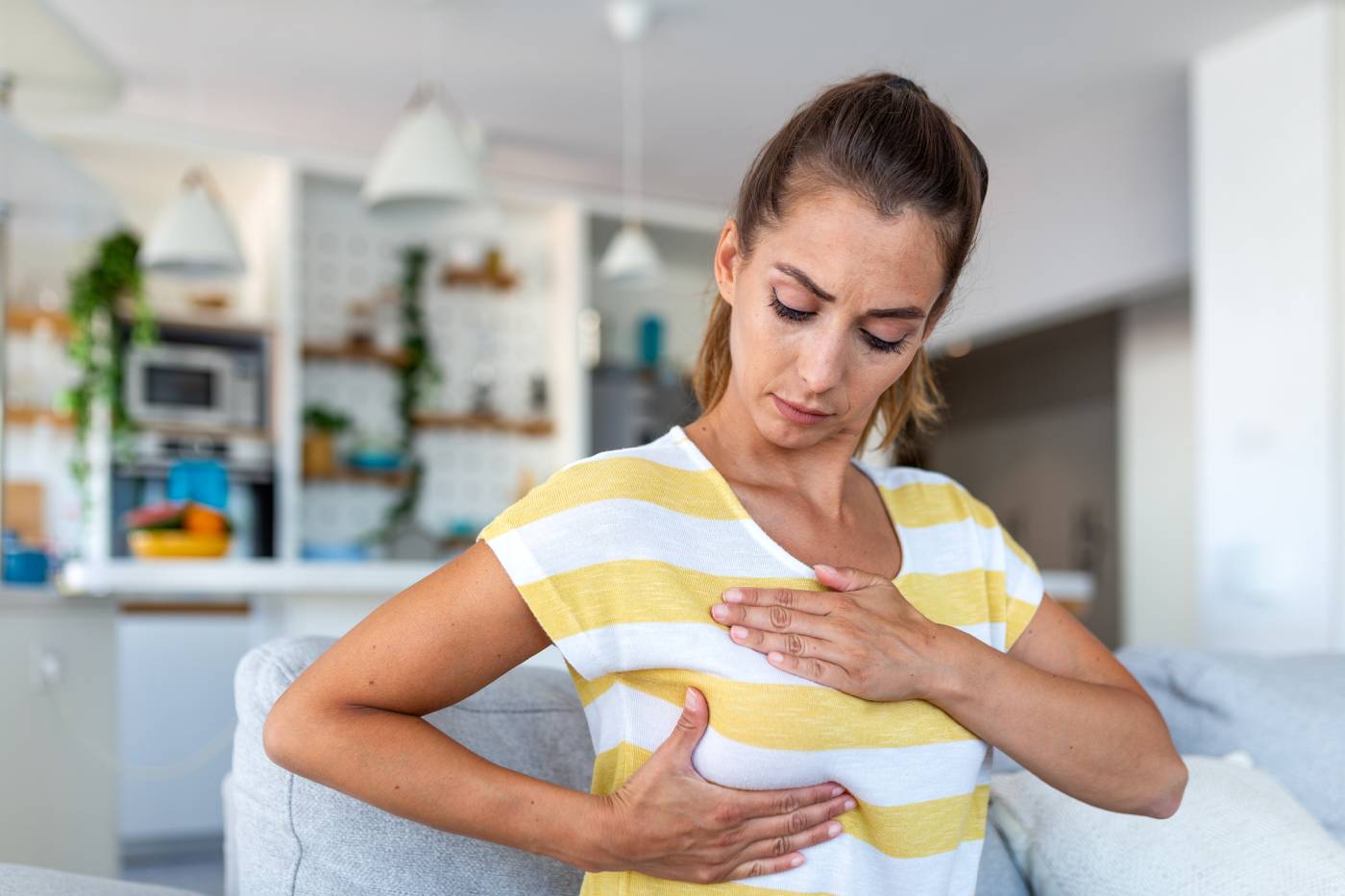
Mrs Alexander comes into the pharmacy for some advice. She is a new mum and has a 2-week-old daughter. For the last few days she has been struggling with breastfeeding and has experienced pain when the baby latches on.
However, she woke up this morning with a painful left breast. She contacted the GP practice to try to speak to the health visitor, but nobody seems to be answering the phone. She thought she’d pop into the pharmacy as she has no one else to ask for advice.
She describes breastfeeding as difficult and painful and tells you that if the symptoms don’t improve she is thinking of giving up breastfeeding, although she really wants to continue as she knows it is good for her and her baby. She asks you what she can do to help with the pain and discomfort when feeding.
- Milk stasis is the main cause of mastitis
- Poor infant attachment is a contributing cause to developing mastitis
- Recovery tends to be rapid, but complications may occur (e.g. infection and abscess)
Problem representation
Breastfeeding mother presents with an acute history of soreness in her left breast, together with breastfeeding difficulties.
Hypothesis generation
Breast soreness in lactating women is mostly attributable to mastitis with up to 30% of them experiencing it. Mastitis is defined as inflammation of the breast, and while it can occur at any time during lactation, it is most common in the first four to six weeks of breastfeeding. However, it can also occur in women who are not lactating.
Milk stasis/milk drainage is the primary cause and is commonly associated with poor infant attachment to the breast or poor feeding. It can also be precipitated through an abundant supply of breastmilk, missed or reduced number of feeds, or the use of nipple shields.
Mastitis should be suspected in women presenting with segmental breast pain, and a swollen, red and tender breast with associated flu-like symptoms (fever/malaise).
Underlying infection is uncommon and symptoms settle with conservative management. Mastitis can lead to the discontinuation of breastfeeding.
Likely diagnoses
- Mastitis (non-infective)
Possible diagnoses
Critical diagnoses
Aide Memoire
Likely diagnoses
Possible diagnoses
Critical diagnoses
Continued information gathering
We know Mrs Alexander has unilateral breast soreness. This allows us to rule out breast engorgement, as this involves both breasts. Mastitis is the most likely cause and knowing if Mrs Alexander has systemic symptoms would allow us to rule out a compressed duct or galactocele. She reports that she feels off colour and feverish, so this reinforces our thinking that she is suffering from mastitis.
Problem refinement
Breast abscess is still a possibility, but it usually follows mastitis. Asking about a recent history of similar symptoms should establish if this is a first-time presentation, or if Mrs Alexander has a history of similar symptoms. She confirms this the first time she has had this problem.
It appears we are dealing with mastitis.
Red flags
Checking for signs of infection is necessary. Purulent nipple discharge, severe pain, and signs of spreading cellulitis suggest infection. Our patient has not observed these symptoms.
Management
Self-care options
Mastitis can usually be treated with self-care measures. For Mrs Alexander, a number of strategies can be employed to help resolve symptoms. These include:
• Check if the baby’s mouth is wide open
• Check if the baby has a large mouthful of breast
• Check if the baby’s cheeks stay rounded during sucking
• Your baby rhythmically takes sucks and swallows
• Your baby finishes the feed and comes off the breast on his or her own
• No change in shape or colour of the nipple after feeds
Prescribing options
Antibiotics may be considered if there are no improvements in symptoms after 24 hours of self-care measures. The antibiotic of choice is flucloxacillin 500 mg four times daily for 10-14 days (erythromycin or clarithromycin should be prescribed if they have a confirmed allergy to penicillin).
Safety netting
You tell Mrs Alexander that she appears to have mastitis and by following some self-care measures her symptoms should settle down over the next 24 hours, but if symptoms do not improve or worsen she should return as she may have an infection and antibiotics would be needed.
1. A 28-year-old lactating woman presents with fever, breast pain, and localised redness. Which ONE of the following findings is most suggestive of lactational mastitis?
(a) Bilateral, painless breast enlargement
(b) Bloody nipple discharge
(c) Diffuse breast tenderness without skin changes
(d) Firm, non-tender breast mass
(e) Localised erythema with warmth and systemic symptoms
2. Which ONE of the following organisms is most associated with infectious mastitis?
(a) Escherichia coli
(b) Mycobacterium tuberculosis
(c) Staphylococcus aureus
(d) Streptococcus pneumoniae
(e) Pseudomonas aeruginosa
3. In non-lactational mastitis, which ONE of the following factors is most associated with its development?
(a) Excessive breastfeeding
(b) Family history of breast cancer
(c) High oestrogen levels
(d) Smoking
(e) Use of oral contraceptives
4. A 35-year-old woman presents with breast redness and swelling for 10 days. She is not breastfeeding and has no fever. The skin shows erythema but no tenderness. Symptoms have not improved with antibiotics. Which ONE of the following should be considered as the most likely diagnosis?
(a) Acute mastitis
(b) Breast abscess
(c) Galactocele
(d) Inflammatory breast cancer
(e) Simple breast cyst
5. A 27-year-old breastfeeding woman presents with breast pain, fever, and malaise. Which ONE of the following helps confirm the diagnosis of mastitis rather than a blocked duct?
(a) Absence of nipple discharge
(b) Bilateral breast involvement
(c) History of breastfeeding
(d) Firm breast consistency
(e) Presence of systemic symptoms
Answers:
1. E 2. C 3. D 4. D 5. E

Share:


In Practice
We know you want to continue to build on your practice, why not hear from others in the sector striving to do the same.